

Week 11 Announcements
- Vision Screening for Kindergarten, 5th, & 8th graders is Monday, October 19 at 8:30 am at Lammersville School. If you can get a letter from your doctor stating whether your student has had vision screening done. Send a copy of the letter to [email protected].
- 8th Graders- October 21 is the 8th Grade PSAT Test at Lammersville School. Arrive at LES at 8:10 am. Test Starts at 8:30 am. Bring your school-issued Chromebook, mouse & headphones (optional), snack & water. No morning Zooms or Focus Times this morning for K-7th grades. Drop-in time 1- 2:45 pm.
- October 22: 150th School Photo, 8:30 am at LES; wear 150th shirt. Morning Zooms to follow at 9 am, K-3, and 9:30 am, 4-8.
- 6th, 7th, & 8th graders need to fill out the Guided Notes form about what you will need for trimester 2. Click here for the form. Form is due Oct. 20.
-
Spirit Wear Sales are here. CLICK HERE FOR SPIRIT WEAR STORE
Zoom Meets
Mandatory live synchronous Instruction will occur this week according to the following schedule using this LINK:
Join Zoom Meeting: Click here to join a meeting. Meeting ID: 932 7643 5887 Passcode: lego
https://zoom.us/j/93276435887?pwd=UUZueVZidXJ3MS8yZUcwWnVoaUpsZz09
All LEO Zoom meetings use this link. Please bookmark this link.
|
Week 11 Zoom Schedule: Drop-in Time is optional. If you have questions, always email Ms. Ripken. All LEO Zoom meetings use this link. Please bookmark this link. |
|||||
|
Monday, Oct 19, 2026 |
Tuesday, Oct 20, 2026 |
Wednesday, Oct 21, 2026 |
Thursday, Oct 22, 2026 |
Friday, Oct 23, 2026 |
|
|
8- 8:30 am |
K- 3rd Morning Zoom |
K- 3rd Morning Zoom |
No Morning Zooms 8th Grade PSAT Testing at LES 8:10- Noon No K- 3 Focus Time today. |
9 am: K- 3rd Morning Zoom |
K- 3rd Morning Zoom |
|
8:30- 9:00 am |
4th- 8th Morning Zoom |
4th- 8th Morning Zoom |
9:30 am: 4th- 8th Morning Zoom |
4th- 8th Morning Zoom |
|
|
9:00- 9:45 am |
Drop-in Time 9 am: 4th- DBA: ELA 9:30 am: 5th- DBA: ELA |
Drop-in Time |
9 am: 4th- DBA: S.S Drop-in Time |
9-1:30 pm Drop-in Time |
|
|
9:45- 10 AM |
Yard Duty |
||||
|
10 am-10:45 am |
Kinder Focus Time |
Kinder Focus Time |
Kinder Focus Time |
||
|
10:45-11:30 am |
1st Grade Focus Time |
1st Grade Focus Time DBA: Music |
1st Grade Focus Time |
||
|
11:30-12:15 pm |
Drop-in Time |
Drop-in Time |
Drop-in Time |
||
|
12:15- 1 pm |
3rd Grade Focus Time DBA: ELA |
3rd Grade Focus Time |
1 pm: 4th- DBA: Music 1:30 pm: 5th- DBA: Science Drop-in Time |
3rd Grade Focus Time 12:45: 150th School Photo w/ provided T-shirts @ LES |
|
|
1-2:45 pm |
Drop-in Time |
Drop-in Time |
Drop-in Time |
||
Tests this week:
K- none
1st- Math, Science
2nd- none
3rd- ELA, Math
4th- ELA
5th- ELA
6th- History
7th- none
8th- none
LEO by Ms. Ripken
Morning Meetings with Ms. Ripken
- Click here-Kinder- 3rd Grades
- Click here- 4th- 8th Grades
- Click here-Kinder- 3rd Grades
- Click here- 4th- 8th Grades
- Click here-Kinder- 3rd Grades
- Click here- 4th- 8th Grades
- Click here-Kinder- 3rd Grades
- Click here- 4th- 8th Grades
- Click here-Kinder- 3rd Grade
- Click here- 4th-8th Grades
- Click here-Kinder- 3rd Grades
- Click here- 4th-8th Grades
- Click here-Kinder- 3rd Grades
- Click here- 4th-8th Grades
- K-3rd- click here
- 4th- 8th- click here
- K-3rd- click here
- 4th- 8th- click here
Weekly Learning Plans
Dates Students Must be at LES Campus
|
Dates students need to come to Lammersville School
|
Class Calendar
|
Week 9
|
|
Week Fall Break October 5-9- Fall Break |
|
Week 10
|
|
Week 11
|
|
Week 12
|
|
Week 13
|
|
Week 14
|
|
Week 15
|
|
Week Thanksgiving Break November 23- 27: Thanksgiving Break, no school |
|
Week 16
|
|
Week 17
|
|
Week 18
|
|
Week: Winter Break 2 weeks
|
|
Week 19
|
|
Week 20 |
|
Week 21 January 18- No School: MLK Holiday |
|
Week 22
|
|
Week 23
|
|
Week 24
|
|
Week 25
|
|
Week 26 February 26- End of Trimester 2 -All work must be completed. |
|
Week 27
|
|
Week 28
|
|
Week 29
|
|
Week 30
|
|
Week Spring Break March 29-April 2: Spring Break- no school |
|
Week 31
|
|
Week 32
|
|
Week 33
|
|
Week 34
|
|
Week 35
|
|
Week 36
|
|
Week 37
|
|
Week 38- Last Week
|
|
Aug 5, 2027 First Day of School for the 2027- 2028 School Year |
Class Links/ Resources
Classroom Information
Tech Support
- Chromebook One2One Coverage -encouraged to purchase.:
Dear LUSD Parents and Guardians,
The 2026/2027 purchasing window will open at the beginning of the school year in August 2024.
* Any student enrolled after September 1st, 2026, will have 14 days from the enrollment date to purchase.
LUSD Families can purchase coverage for students after OPEN ENROLLMENT, but your student's device must be inspected by the school site and found to be free of damage.
You will also need to pay off any previous fines before purchasing coverage.
__________________________________________________________
- Coverage can still be purchased at any time during the school year, but the device must be inspected by the school site's LCT or a LUSD I.T. Technician before the purchase.
- The student's device must be free of any damage to be eligible for coverage.
- ALL student fees will need to be paid off any previous fines before purchasing coverage.
Price: $50 for One2One Chromebook Care Plan
Coverage: Includes 1-year coverage and free first repair
Benefits: Reduces accidental damage costs
_________________________________________________________
Lammersville Unified School District recommends that all students purchase the One2One Chromebook Care Plan for their devices. The district self-coverage program provides coverage at a low price. The One2One Chromebook Care Plan purchased through the district covers repairs, shipping, and a loaner device. Students can purchase the One2One Chromebook Care Plan (optional) from the LUSD Webstore. The cost is $50.00 per student. Students who had the One2One Chromebook Care Plan from previous years will need to purchase another year; the coverage is valid for one school year. Office Supervisors, Learning Commons Tech, and I.T. Techs will verify the purchase of the One2One Chromebook Care Plan and enter the information in the student's account.
The terms of the LUSD One2One Chromebook Care Plan are defined below.
For more information, contact your site's Learning Commons Tech or I.T. Tech.
LUSD One2One Chromebook Care
INTRODUCTION
Care of all instructional materials, including Chromebooks, distributed by LUSD is the responsibility of the student to whom they are assigned and the student's parent/guardian. This includes costs associated with damages and loss or theft (California Education Code 48904). The purpose of this policy is to protect LUSD families from accumulating debt due to accidental damage or theft (see definitions below) of school-issued Chromebooks.
POLICY TERM
- Policy runs from August 6th, 2026 - July 31st, 2027.
- Policies purchased at any time between those dates will terminate before the start of the 27/28 school year based on the board-adopted school year calendar.
- Students who are issued devices at the beginning of the regular school year may purchase device coverage until August 31st, 2026, without having the device inspected. After August 31st, 2026, the device and charger must be inspected by Learning Commons Tech or I.T. Tech before coverage can be purchased.
- Newly enrolled students who receive devices that are issued after August 31st, 2026 will be given 14 days to purchase device coverage without having the device inspected.
- Devices and chargers issued during summer school must be inspected by the site's Library Tech or I.T. Tech before coverage can be purchased.
COST
The One2One Chromebook Care Plan costs $50 per term (see above). Policies purchased mid-year will not be prorated.
REFUNDS
There will be no refunds. If a student drops from school and then returns later in the school year, the policy will still be in effect until the expiration date of the original policy.
DEDUCTIBLES (per term)
- First covered repair- $0 deductible
- Second covered repair- $25 deductible
- Third covered repair - $50 deductible
After 3 repairs/replacements, the policy is void for the remainder of the term, and the parent/guardian is responsible for all damage to the device
YOUR DUTIES IN THE EVENT OF LOSS OR DAMAGE
- Report the loss or damage to the Library Tech or I.T. Tech within 30 days of the event. In the event that school is not in session, you must notify the site Library Tech or I.T. Tech via email [email protected]
- Notify the local police if the loss is due to theft, burglary, robbery, or vandalism. You must then provide the official police report to LUSD. LUSD can provide you with the device information (make, model, serial number, and cost) for the police report.
SETTLEMENT OPTIONS
LUSD will pay for the cost of repair of the covered device including parts and labor. If the device cannot be repaired, an equivalent replacement of LUSD’s choosing will be provided. If a replacement device is provided, this coverage will transfer to the replacement device for the duration of the policy. While a student’s device is being repaired the student will be issued a loaner device of LUSD’s choosing. The policy will cover the loaner device until the student’s original device is returned or a permanent replacement device is issued.
FRAUD, CONCEALMENT, AND MISREPRESENTATION
Coverage may be denied if the student willfully defrauds, conceals, and/or misrepresents any material information about the cause of damage or loss of the device.
DETAIL OF COVERAGE
- Accidental damage, drops, liquid spills, and submersion
- Power surge
- Mechanical failure or defect
DETAIL OF EXCLUSIONS OF COVERAGE
- Corrosion and rust
- Dishonest and/or intentional acts
- Unexplained loss or mysterious disappearance
- Government seized
- Tampering with or unauthorized attempts to repair the device.
POLICY PORTABILITY
If a student transfers to another LUSD site during the policy term, the coverage will transfer to the new site and remain in effect until the end of the term. If a student transfers to a site outside of LUSD, the coverage does not transfer to the new district/school, and the device must be returned to the site. However, if the student transfers back to a LUSD site before the end of the term, the coverage will remain in effect until the end of the term.
Warm regards,
Shawn Yohannan
Director of Information Technology
Lammersville Unified School DistrictRevise 07/28/2026
Digital Citizenship & Internet Safety
| NetSmartzKids |
| Safety, Privacy & Security |
Enrichment
LEO Remote State Testing Plan
|
Click here for Testing Playbook
LEO Remote State Testing Plan Please read all of this document.
Use this Zoom link for this meeting. https://us02web.zoom.us/j/93276435887?pwd=UUZueVZidXJ3MS8yZUcwWnVoaUpsZz09 Testing Dates:
9:15 am each morning to start on Zoom.
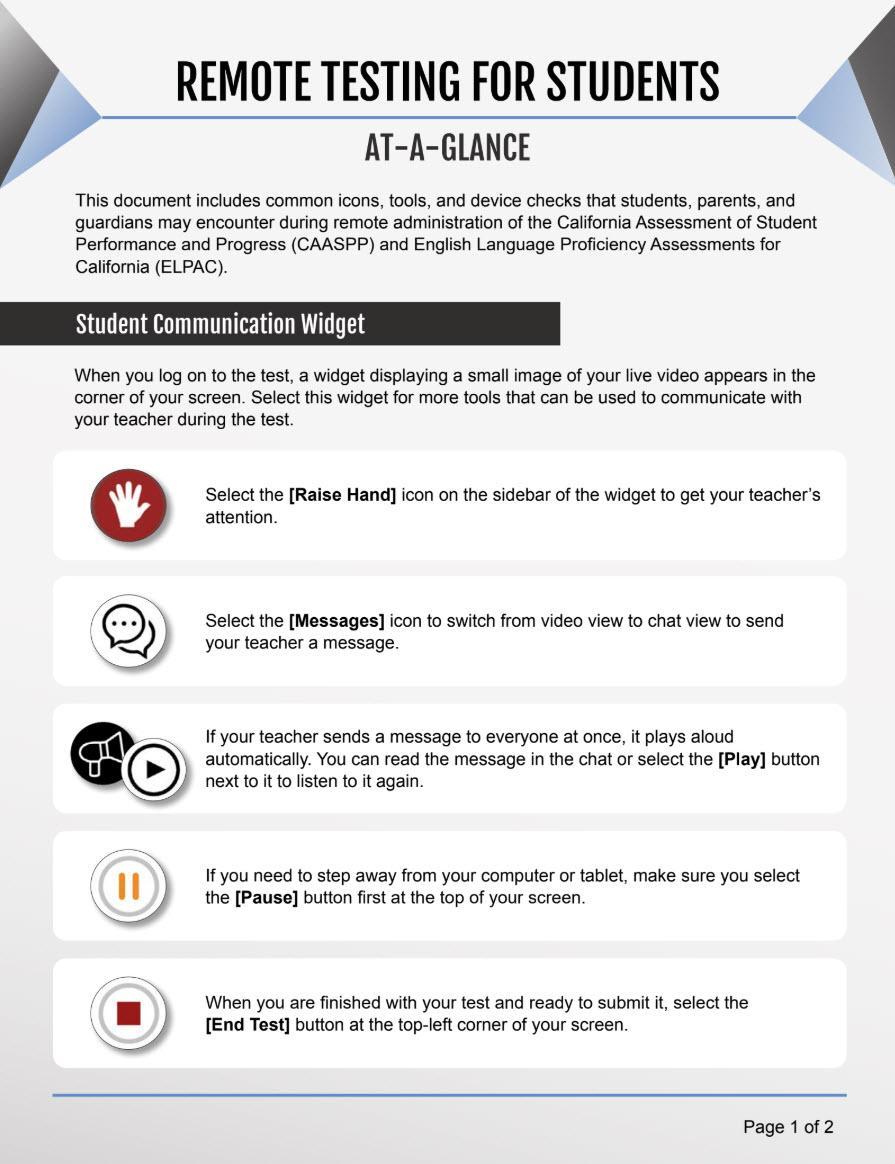
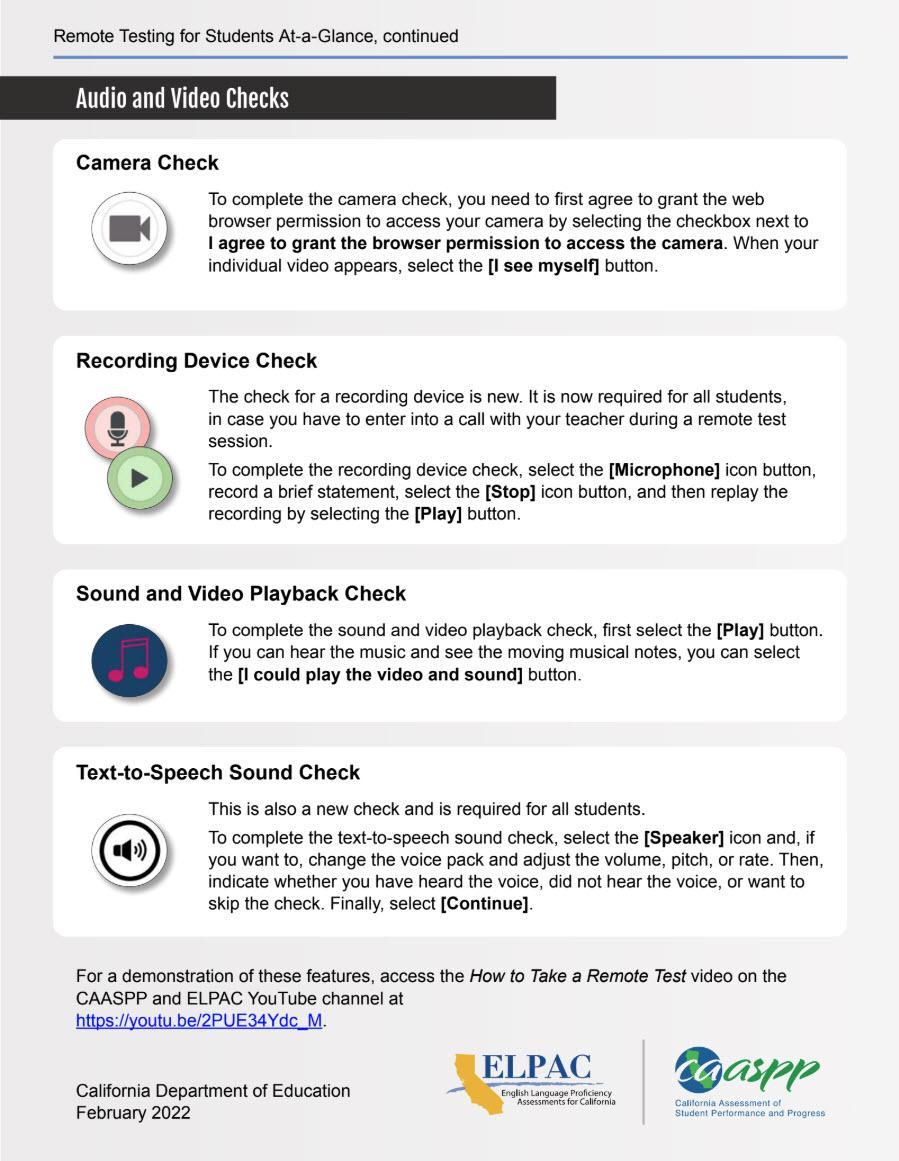
Before Testing Begins Check Your Technology Needed The minimum technical requirements for students are as follows:
Secure BrowsersThe secure browser is a program on a student’s device—for example, a desktop PC, laptop, or tablet—that allows a student to take the CAASPP and ELPAC. It is the application that students and teachers have used for testing in prior years. When the secure browser is running, it is the only program allowed to be open on the device. Recent enhancements to the secure browser have been made, enabling communication and video monitoring within the system to support remote testing. Student Test Environment A secure online testing environment is possible when an individual is restricted from accessing prohibited computer applications (local or internet-based) or copying or otherwise sharing test data. A secure online testing environment is necessary to maintain test security and provide a stable testing experience for students across multiple platforms. The security of assessment instruments and the confidentiality of student information are vital to maintaining the validity, reliability, and fairness of the results. Requirements: The test environment refers to all aspects of the testing situation while students are testing and includes what a student can view, hear, or access (including access via technology).
During Testing
During and After Testing
|
|||||||||||||||||||||||||||||||||||||